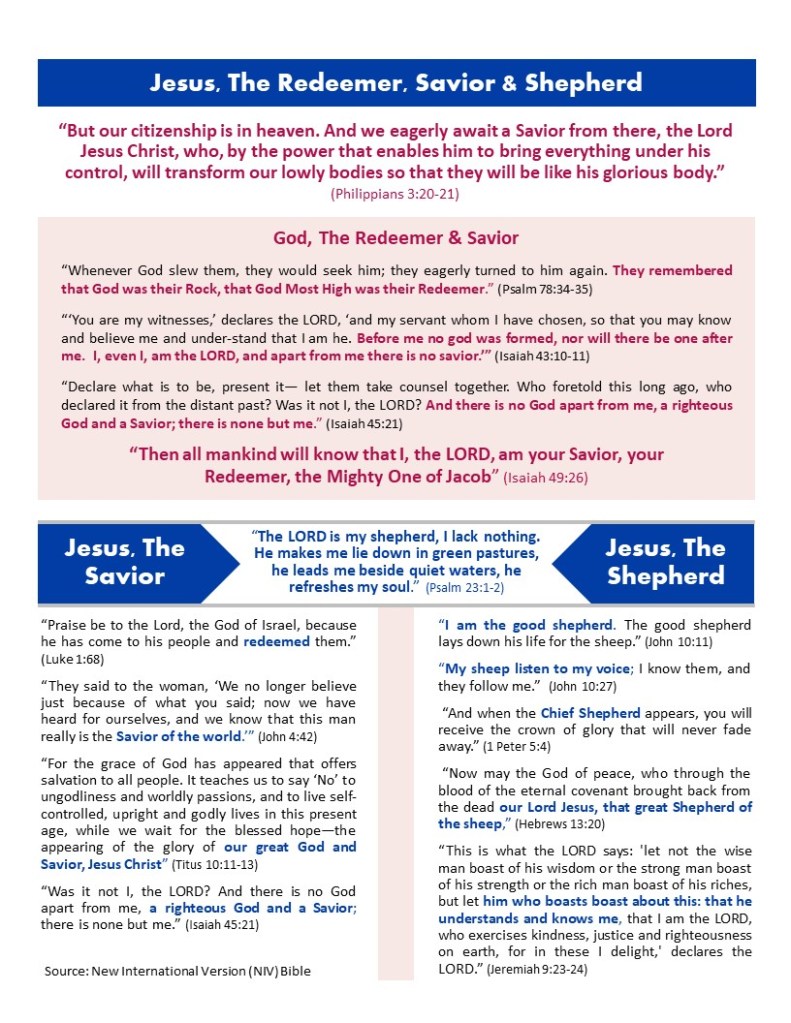
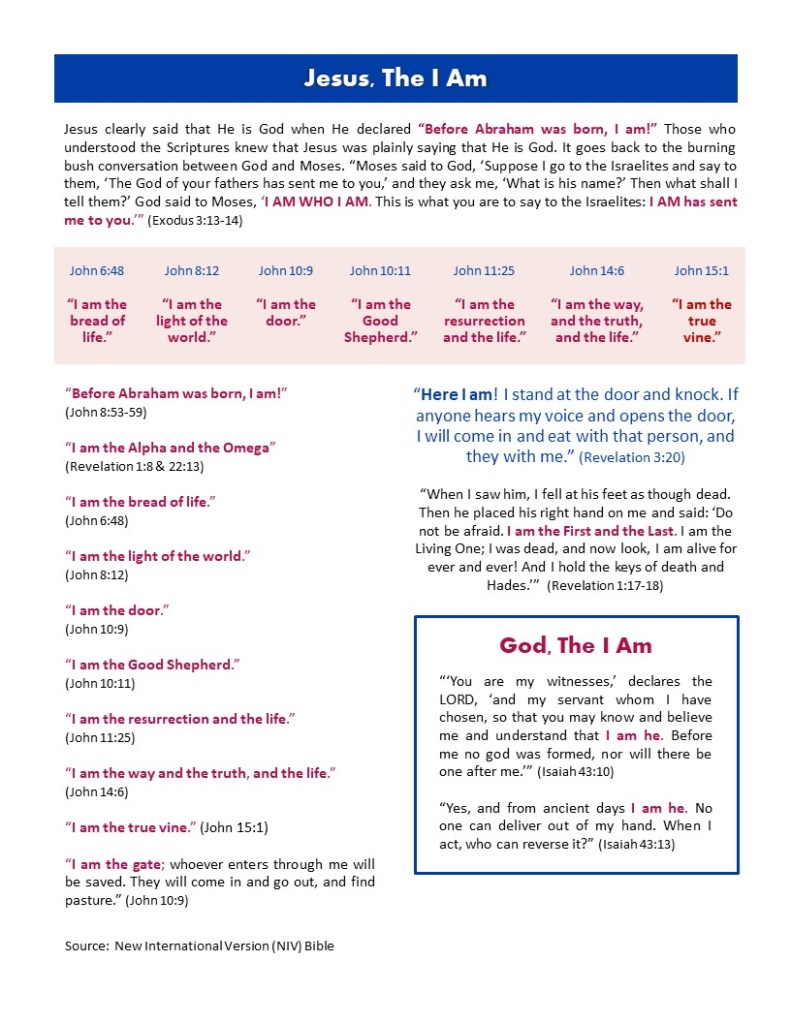
Though Jesus is said to have many names, those labels are actually titles or descriptions of roles. For example: Redeemer, Savior, Almighty, Wonderful Counselor, Prince of Peace. Those identifiers are not names, instead they describe attributes, authority, or character traits much like Accountant, Secretary, and Engineer would describe jobs in our culture.
Often in the Bible language, terminology is intentionally used to express prophetic fulfillment. For example in the Old Testament, God dwelled among His people in the Tabernacle (Exodus 25:8-9). The Ark of the Covenant was a place of God’s presence (Exodus 25:22). The New Testament fulfillment was God in flesh, aka Jesus, dwelling among His people (John 1:14). While we don’t go around calling Jesus “The Tabernacle” or “The Ark of the Covenant” to identify Him as “God with us” or “God’s presence”, those identifiers represent prophecies fulfilled as God made Himself known in human form (Isaiah 9:6, Exodus 25).
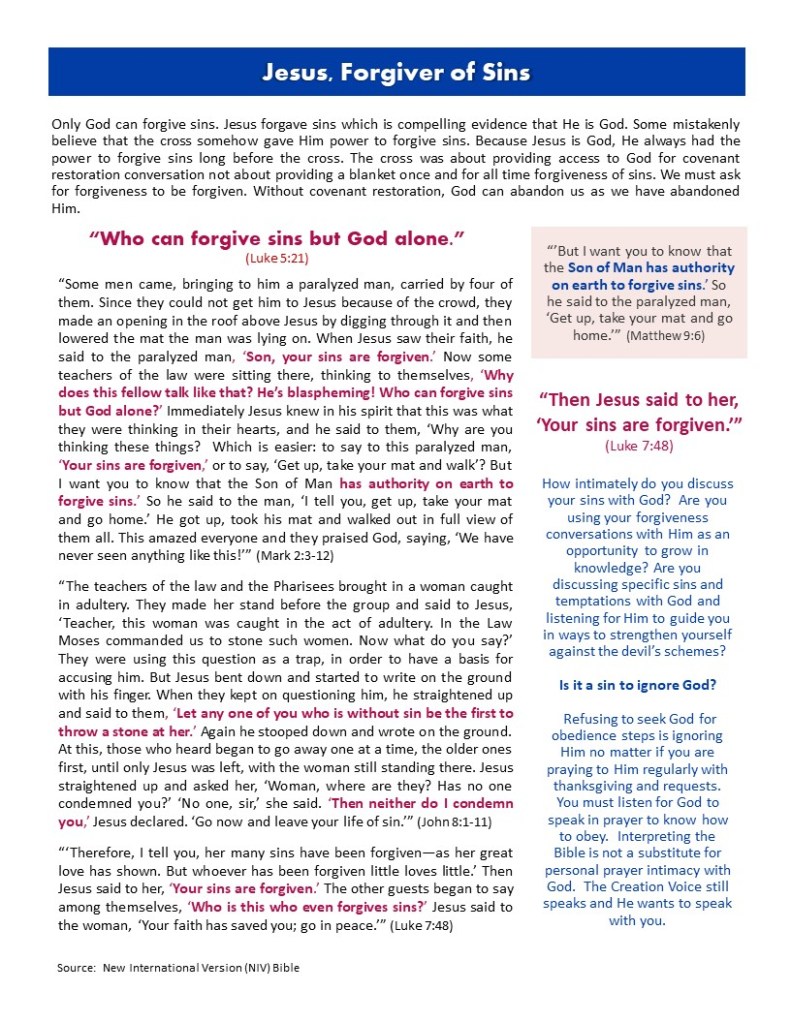
Let’s examine this further. God gave exact specifications for how the Tabernacle would be designed. The Tabernacle was a tent of meeting and a precursor to Solomon’s Temple. Both were created to be a place where a sinful people could approach a Holy God. The high priest would enter the Most Holy Place once a year on the Day of Atonement. The high priest’s role was to sprinkle blood on the mercy seat atop of the ark of the covenant to atone for the sins of the people. The hope was that the judgment of God would be transformed into mercy from God. I should note that the sprinkling of blood did not obligate God to forgive the rebellion or evil deeds of the people. It was simply an act to signal a hope for covenant restoration from God. Without restoration God could abandon His people as they abandoned Him in their disobedience and sin.
Everything about Christ on the cross was to replace the earlier Tabernacle and Temple. For example: The veil or curtain that divided the Holy Place and the residing place of the Ark of the Covenant (aka the Most Holy Place) was torn from top to bottom when Jesus died. The torn veil at the entrance to the Most Holy Place symbolized our ability to approach God for a private and individual covenant restoration conversation. We don’t need a high priest to approach God on our behalf. Jesus was the final priest in the priestly lineage. He forever fulfilled the need for intercession. We are each responsible to have conversation directly with God. (Read Hebrews 10:10-12.)
 The Rogue Prophet